

THANK YOU FOR SUBSCRIBING

Hrtech Outlook Weekly Brief
Be first to read the latest tech news, Industry Leader's Insights, and CIO interviews of medium and large enterprises exclusively from Hrtech Outlook
A featured contribution from Leadership Perspectives: a curated forum reserved for leaders nominated by our subscribers and vetted by the HR Tech Outlook Advisory Board.

Making Safety a Shared Responsibility 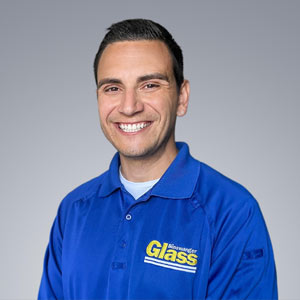
Paul J. Paz
I believe being passionate about safety has to be paired with being compassionate about people. Trust is everything, and it has to be earned through both conversation and action.
I have always made it clear to employees that I am on their side. Over time, they begin calling, texting or emailing with concerns because they know I am not going to throw them under the bus for speaking up. When employees identify hazards, I also want them involved in developing the solution. The people performing the work every day often have an incredible amount of knowledge; sometimes they simply need to be empowered to use it.
My role is to ask, ‘what if we did it this way?’ and start the conversation. Two or three minds working through a problem together can develop some amazing solutions.
I never wanted to be the ‘safety cop’ who shows up and says, ‘you cannot do that. Find another way.’ I want to offer solutions, not roadblocks.
You know you are building genuine ownership when employees proactively contact Safety for ideas and solutions, report near misses, identify hazards, and take pride in their workplace. One of my favorite indicators is simply walking into a facility and being welcomed with smiles instead of watching everyone hide because ‘safety is here.’
Making Safety Training Practical
Training has to be relatable. A cookie-cutter presentation that simply covers regulations might satisfy a requirement, but that does not necessarily mean it will change someone’s behavior.
Whether we are training on aerial lifts, scaffolds, swing stages, rappelling, CPR/First Aid or another subject, we try to relate it directly to the work our employees perform. One way we have accomplished this is by investing in our own employees through Train-the-Trainer programs. Our trainers can incorporate their own experiences, talk through actual tasks they have performed, and even share some laughs while still respecting the seriousness of the subject.
I am also a firm believer in hands-on training. Even during company-wide safety meetings, our coordinators incorporate practical exercises. If we are discussing fire extinguishers, employees physically handle them and walk through the process. If it is fall protection, we bring out harnesses and equipment and perform inspections and adjustments together.
Most importantly, we follow up in the field. The real test of training is not what an employee does in a controlled environment; it is what they do on the jobsite when their focus has shifted back to getting the work done.
Listening to Employees on Safety
Managers have to participate in safety training too. Even if they believe they will never personally perform the task, they need to understand what is expected of the employees they lead.
When an employee stops work because of a safety concern, our approach is simple: whether management initially sees the concern as valid or not, we treat it as entirely valid.
"Our job is not to burden people or tell them everything they cannot do. It is to support, educate, empower and genuinely care about their well-being."
Sometimes an employee may not immediately see the solution, and that is okay. Management’s responsibility is to recenter the conversation around safety, involve everyone affected, and talk through the concern. I especially like bringing peers into these conversations. A third-party perspective from someone who is not Corporate Safety or a supervisor can provide credibility and help develop practical solutions.
Most importantly, the employee needs to walk away knowing they were heard. If employees believe raising a concern will result in frustration, dismissal or retaliation, eventually they will stop raising them.
Using Technology to Keep Safety Personal
As a millennial, I am a strong advocate for technology and, quite frankly, I love the idea of giving all of it a try. I am particularly excited about advancements in ergonomics and wearable technology. Throughout my career—from oil refineries and oil fields to heavy civil construction, underground pipelines, environmental disaster cleanup, mining and glazing—ergonomics has consistently been a challenge. Strains and sprains are sometimes treated as though they are simply unavoidable. I believe emerging technology can help us challenge that assumption.
Automation is another major opportunity. Automated training records, telematics and similar technologies can reduce the administrative burden placed on safety professionals. Documentation is important, but safety culture is not built sitting behind a desk filing paperwork. Giving safety professionals that time back allows us to be where we belong: with employees, observing work, building relationships, and improving workplace habits.
Interestingly, I have also found that younger employees, despite growing up surrounded by technology, still appreciate in-person, interactive training. Technology should enhance the human element of safety leadership, not replace it.
Learning Safety beyond the Books
I came into safety the old-school way. I started in the fire service as a firefighter/EMT and eventually began providing rescue services during refinery shutdowns. I remember going through a Chevron safety orientation and being amazed by the amount of planning that went into preventing an injury during what I had previously viewed as relatively simple work.
Something clicked. I realized I was becoming more passionate about preventing the emergency than responding to it.
I began networking with safety professionals, taking additional rescue assignments, asking questions, and eventually had opportunities to work alongside incredibly experienced safety leaders. Just as importantly, I learned from the workforce.
That is the advice I would give someone entering this profession: get out there. Network with safety leaders, but also network with the people actually doing the work. Listen to them. Be open-minded. Earn trust through conversation and then reinforce that trust through your actions.
Our job is not to burden people or tell them everything they cannot do. It is to support, educate, empower and genuinely care about their well-being.
Some of the greatest safety knowledge you will ever gain will not come from a book. It is already out there with the workforce—you just have to be willing to listen.
