
THANK YOU FOR SUBSCRIBING

Hrtech Outlook Weekly Brief
Be first to read the latest tech news, Industry Leader's Insights, and CIO interviews of medium and large enterprises exclusively from Hrtech Outlook
A featured contribution from Leadership Perspectives: a curated forum reserved for leaders nominated by our subscribers and vetted by the HR Tech Outlook Advisory Board.

Moving Beyond Traditional HR Metrics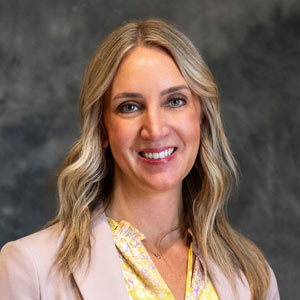
Darlene Fuery
HR technology has transformed how we manage payroll, benefits, recruiting, reporting, compliance, and countless other administrative responsibilities. Automation and system integrations can eliminate hours of manual work and give HR professionals access to more data than ever before, but access to more data does not automatically produce better insight.
As technology continues to take over transactional work, one of the most valuable skills HR professionals can develop is the ability to recognize what the information in front of us is actually telling us about the business. That requires looking beyond traditional HR metrics.
Creating Capacity for More Strategic HR Work
HR is an administratively heavy profession by necessity. Compliance, employee relations, payroll, benefits, and documentation require significant time and attention. For small HR teams and departments of one, the same person thinking about workforce strategy in the morning may be resolving a benefits issue or processing payroll that afternoon. The day-to-day work does not disappear simply because we want HR to operate more strategically. That reality makes creating capacity especially important, and technology can help.
HR professionals should regularly evaluate their HRIS and other systems to determine what can be automated, integrated, or streamlined. Many platforms offer capabilities and API integrations that organizations are not fully utilizing. Working closely with HRIS providers, benefit partners, and other vendors can eliminate redundant processes and significantly reduce manual work. The greater opportunity, however, is not simply efficiency, but how we reinvest the time technology gives us back.
Connecting Workforce Data to Business Performance
At the same time, we need to be careful not to automate ourselves out of understanding our own data. Payroll processing may be an administrative function, but payroll data provides valuable visibility into the organization. Departmental hours can reveal overtime trends, changes in staffing demand, or operational patterns that may eventually become part of a larger management discussion. Automate the mechanics while maintaining visibility of the information those processes produce. The more familiar HR becomes with the normal rhythms of the organization- labor costs, hours worked, overtime, staffing levels, turnover, revenue, and productivity- the easier it becomes to recognize when something doesn’t fit. Dashboards can tell us when a number changes. Business knowledge helps us understand whether the change makes sense.
"As technology continues to take over transactional work, one of the most valuable skills HR professionals can develop is the ability to recognize what the information in front of us is actually telling us about the business."
HR data becomes more useful when we stop analyzing it in isolation. Consider a location where employee hours have increased substantially. Looking only at payroll, we can identify the increase and calculate the cost, but that does not tell us whether the additional labor is creating value for the business.
Adding revenue, productivity, or other operational measures changes the conversation. The purpose is not for HR to determine how the operation should schedule its workforce. Looking only at payroll tells us what labor costs are. Connecting payroll to revenue and productivity begins to tell us what that labor is producing.
Bringing HR into Cross-Functional Business Conversations
The same principle applies to compensation. When an organization considers employee wage increases, HR naturally evaluates market competitiveness, retention, internal equity, and employee impact. A complete recommendation should also consider the financial questions: What will the increase cost, and how will the organization sustainably fund it? A sound people strategy and a sound business strategy cannot be separated.
Developing this perspective requires HR professionals to move beyond the traditional boundaries of the HR function intentionally. Build relationships with operations and accounting. Ask questions about the reports they review and the measures they use to evaluate performance.
Learn how the organization generates revenue, what drives costs, where margins are pressured, and what operational challenges leaders are trying to solve. This can be uncomfortable, particularly when the conversation moves into areas where we do not have formal expertise, but we do not need to walk into those conversations with all the answers. We need to be willing to ask questions, learn the business, and understand how the information we already have connects to the decisions being made around us.
If your organization has cross-functional management meetings and HR is not participating, ask to be involved. If those conversations are not happening, consider whether bringing key leaders together would create value. HR does not need to become finance or operations. We do need enough understanding of both to recognize when workforce decisions intersect with broader business performance.
Turning Workforce Signals into Business Insight
HR has access to a combination of information that few other functions see in quite the same way. We see payroll trends, recruiting challenges, employee concerns, turnover, compensation, attendance, benefits, and workforce behavior. Each data point tells us something. The greater value comes from understanding how those signals connect to what is happening elsewhere in the organization.
Technology will continue to improve our ability to collect, automate, and report HR information. That makes human interpretation more important, not less. For HR professionals already managing full workloads, developing this level of business understanding will not happen overnight.
It starts by creating capacity where we can, asking more questions, building relationships outside HR, and paying closer attention to the business behind the workforce. The goal is not to have more data or produce better reports. It is to understand the business well enough to recognize what the workforce is telling us and bring that insight forward before someone has to ask.
